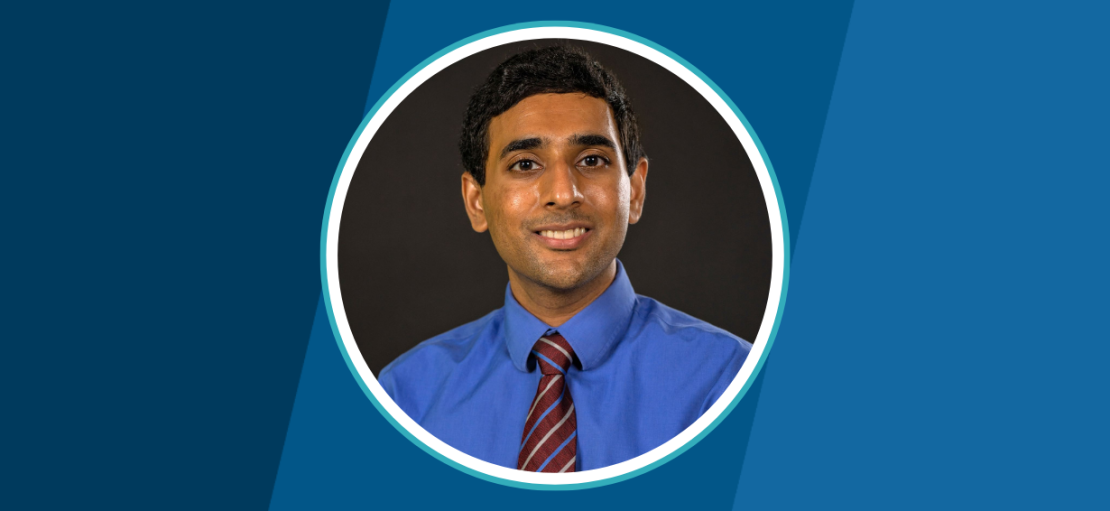
The Physician Who Leads by Listening: Meet ABIM’s Inaugural Deputy Chief Medical Officer, Dr. Yuvaram Reddy
One experience early in his career has stayed with Dr. Yuvaram Reddy ever since: the most meaningful moments in medicine begin with listening. An ABIM Board Certified nephrologist, Dr. Reddy has carried that philosophy throughout his work — caring for patients, researching better ways to deliver care and training future physicians.
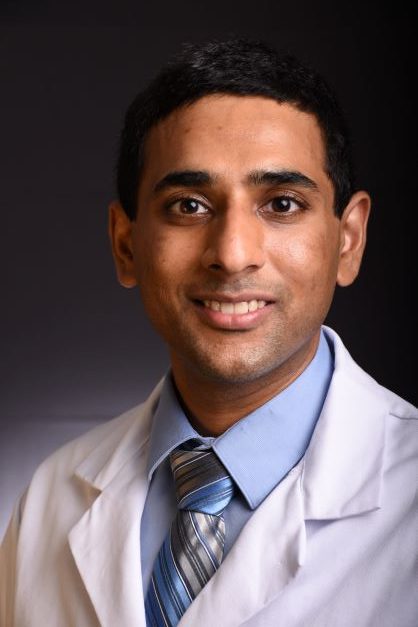
Yuvaram Reddy, MBBS, MPH, recently joined the American Board of Internal Medicine (ABIM) as its inaugural Deputy Chief Medical Officer. In this newly created role, Dr. Reddy will deepen engagement with both the profession of medicine and the public it serves.
As he begins, Dr. Reddy says he is looking forward to one thing above all: listening.
“I’m excited,” he said. “Part of the role is to help engage the broader community — including our diplomates, patients and the greater public. That perfectly aligns with my experience in community engagement work, qualitative research, implementation science and health equity education. I’m excited that, in this new job, I get to lean in, listen to people, hear what they are really thinking, and work on cocreating solutions that are practical and exciting for them.”
For Dr. Reddy, his commitment to listening began at the bedside.
During his internal medicine residency at Boston Medical Center, he cared for many patients with kidney disease who “crashed” into kidney failure without fully understanding their treatment options. While some patients transitioned to doing dialysis at home, many others were unaware home dialysis was even an option.
“I was struck by how the folks on home dialysis seemed more empowered, engaged and aware of what they needed and wanted,” Dr. Reddy said. “In contrast, the folks who ‘crashed’ into hemodialysis often didn’t even know that they had other options, like home dialysis.”
After learning more about home dialysis, he discovered that home dialysis could be better for patients. Struck by the fact that few people were on home dialysis, even though it was better for patients, he decided to focus his career on expanding access to home dialysis and addressing disparities in kidney care.
“I wanted to have a career where I had the opportunity to make a difference beyond what I could do in my clinical visits, one patient at a time,” he said. To accomplish this, he pursued a nephrology fellowship at Mass General Brigham and simultaneously completed a Master of Public Health degree at the Harvard T.H. Chan School of Public Health. “I learned about implementation science, which is a scientific field focused on figuring out how to close that gap between what the evidence shows and what actually happens in practice. I decided to focus on being an implementation scientist and ask broader questions. How do you engage clinicians? How do you engage patients? How do you engage the broader community to figure out how to solve these real-world problems in a sustainable way?”
Those experiences led Dr. Reddy to a collaborative approach to research — one where patients, care partners, physicians and other members of the care team work together to improve care.
“I’ve learned that if you want to build something that has the hope of being sustainable, it is important to do three things: engage the people who are steeped in the problem early, engage them often, and engage them meaningfully,” he said. He often returns to a phrase that captures that sentiment: “Nothing about us without us is for us.”
Throughout his research, Dr. Reddy has worked alongside patients as partners, inviting them to serve on advisory boards, coauthor publications and op-eds, do interviews together and help design programs intended to improve care.
Dr. Reddy plans to bring that same perspective to supporting physicians.
As an educator, he has worked with medical students, residents and fellows and believes different physicians need different types of support throughout their careers.
“What I’ve learned is, there’s no one-size-fits-all solution,” he said. “Everyone is different. Everyone has different needs, and people also have different needs at different time points in their life.”
As Deputy Chief Medical Officer, Dr. Reddy is looking forward to connecting with physicians across internal medicine and its subspecialties — the internists and subspecialists at the heart of ABIM’s work — in every practice setting.
“I believe there’s excitement about trying to find new ways to engage folks across the country,” he said. “I’m excited to listen to people who are already engaged with ABIM, and I am excited to listen to folks who may not have felt like they’ve been heard before.”
One experience early in Dr. Reddy’s training continues to shape how he approaches medicine.
As a resident, he once cared for a veteran with advanced liver disease in the intensive care unit over a few weeks. He spent several days with the patient’s family as they came to terms with the reality that the patient was at the end of his life. During one of Dr. Reddy’s overnight shifts, the veteran died peacefully. He watched as the care team draped the veteran with a burial flag, and then accompanied the nurse and family as they quietly walked together to transport his body to the hospital morgue. The silent solidarity of participating in that journey stuck with him.
“That experience taught me that, as physicians, we tend to focus our time on maximizing life and ‘offering everything’ whenever we can, in the hope that treatments will work. Often, fortunately, they do work, and we have this awesome opportunity to heal. But, that experience taught me that part of our role as physicians is not just to focus on maximizing life, but that our job also has a focus on alleviating suffering, listening to patients and families, and helping people at the end of their life so that they can die with the dignity and grace that they deserve.”
That experience reinforced the importance of listening.
“Sometimes just being present, and sharing a moment in silence, can make a difference. When clinical encounters and visits are short, we tend to prioritize filling it with as much information as we can, which can be overwhelming,” Dr. Reddy said. “Experiences like that reinforce in me the idea that there are many components to the art of practicing medicine … some of which are not fully elevated and valued in the way that they ought to be. That humanity of medicine can be hard to measure and showcase. I hope to find more ways to bring more of that humanity in the work that we do together.”
As ABIM’s Deputy Chief Medical Officer, Dr. Reddy says he plans to spend a good amount of his time in his first year listening and learning from physicians, patients, colleagues and the broader community. For him, that is where the work of enhancing the quality of health care begins.
Dr. Reddy’s professional background
Prior to joining ABIM, Dr. Reddy built his career as a nephrologist-scientist at the Perelman School of Medicine at the University of Pennsylvania, where he balanced clinical care, research and education. His work focused on expanding access to home dialysis, addressing health inequities in kidney care policy and value-based care, and advancing implementation science methods in nephrology. His work helped shape national practice and policy. He was also a core investigator at the VA Center for Healthcare Evaluation Research and Promotion (CHERP), where he used qualitative methods to study barriers in home dialysis, after which he codesigned a veteran-focused peer support program in partnership with the National Kidney Foundation to help veterans learn about home dialysis and address gaps in care.
Alongside his work as a clinician and researcher, Dr. Reddy has maintained a deep commitment to health equity and education. He cofounded and codirects the Building Leadership OppOrtunities in Medicine for Health Equity (BLOOM Health Equity) pathway, which has supported over 50 trainees and early-career faculty. As an adjunct faculty member, he will continue to see patients at the Corporal Michael J. Crescenz VA Medical Center.