“It’s How We Fulfill Our Mission”: Dr. Laura Evans on Listening to the Profession
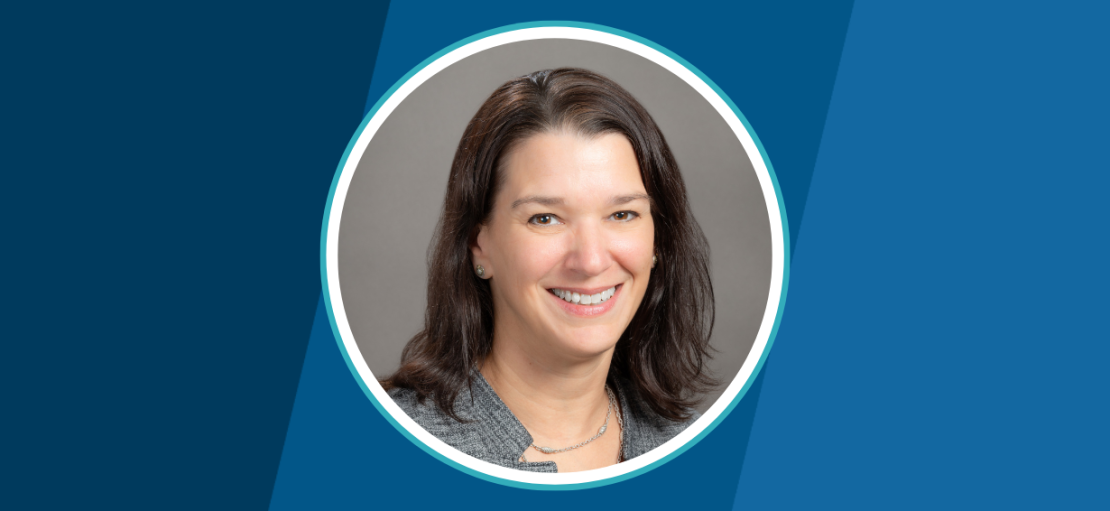
Laura E. Evans, MD, MSc, is a Professor of Medicine at the University of Washington. She joined the ABIM Board of Directors in July 2026 having previously served as a member and then Chair of the Critical Care Medicine Board, and recently as Chair of the ABIM Council. A nationally recognized expert in critical care and sepsis, Dr. Evans focuses on the translation of evidence into clinical practice—particularly in sepsis—and on building the capacity to prepare for and respond to high-consequence infectious diseases. She is the Executive Director of the National Special Pathogens System.
Twelve years ago, I joined ABIM Governance as a critical care specialist. My perspective has evolved from thinking deeply about certification in one specialty to considering the broader landscape of internal medicine and its subspecialties—and the challenges they share. What I’ve learned from all of that is what a mission-driven organization ABIM is. Whether it be the Board of Directors, Councilors and governance, Item-Writers or physicians in the early career network, everyone takes the mission seriously because they genuinely believe that knowing physicians are staying current matters for patients, and that resonates deeply with me.
One thing that I’ve really loved seeing grow and develop over the last 12 years has been ABIM’s prominent, transparent commitment to listening to the diplomate community and involving physicians from all practice types in every part of its work and mission.
I remember having a conversation with Dr. Kimberly Bird— now the Chair of the Critical Care Medicine Board—about six years ago. She is a community-based practicing physician, and I was encouraging her to apply for an opening on the Specialty Board. She was skeptical. “You don’t really want people like me on the Specialty Board,” she told me. And my answer was immediate: “We one-hundred percent do.”
A lot of what has changed over the last 12 years is broadening the scope of voices represented in governance and ABIM’s work as a whole. I was chair of the Council (serving in a role responsible for policy and programming beyond my own specialties) at a time when we were thinking deeply about where the profession is going. It was time to ask a different question: Whose voices are we not hearing well enough?
If equally robust research tells us something needs to change, then our responsibility is to learn from it and improve. The Board is committed to that mission and the protection of that foundational principle that we are of the profession, for the public.
The Council recognized that we had a gap. When we’re in training, we’re acutely aware of the initial certification exam that we will eventually take. It represents this huge culmination of years of training and meeting the threshold by which you demonstrate that you are ready for independent practice. But then for the first ten years after initial certification, physicians have relatively little opportunity to engage with ABIM. The Council undertook to address this gap, and what I loved about the process was that we didn’t go in assuming we knew the answer. We listened. We talked to early career diplomates about their experiences, their expectations and what a career-long relationship with ABIM should feel like. Those conversations led to the creation of the Early Career Committee and a growing initiative to develop those relationships and create an experience shaped by physicians, for physicians.
Throughout my career, I’ve been interested in structures and systems that improve outcomes—whether it’s developing sepsis guidelines or strengthening preparedness for high-consequence infectious diseases. Now, as a Director, I see my work on the Board as analogous to that: how do we set up structures and systems with input from everyone affected in a way that drives patient outcomes and patient care?
Medicine is moving so fast. What I want to know as a patient, as a family member, is that physicians are keeping up with developments in the field. Preparedness depends on staying current. Part of the work of the Board is to ensure that the structures supporting certification continue to work better for the people it’s supposed to be helping: physicians and the public they serve.
For me, the commitment to staying current is internally driven. Even though I don’t practice general internal medicine, I’ve kept up my initial certification in internal medicine. There’s no requirement for me to maintain it, but it’s important to me. My professional identity started with being an internist and knowing that I’m sufficiently up to date to meet the certification requirement is still an important part of that and an external validation that I’m meeting the benchmark.
As I begin my work with the Board, I’m really excited about the work we’re doing in a couple of different spaces. One is innovation—thinking about how to make assessments even better: more efficient, more natural, more aligned with the patients we actually see. I’m also thinking broadly about how ABIM is predominantly assessing medical knowledge and critical thinking, but those are only part of what makes an excellent physician. So, I’m excited to contribute to conversations about how to assess other competencies that matter in patient care, like communication skills.
The other area I’m excited about is working hand-in-glove with ABIM’s research division and our commitment to transparency around research findings. If high-quality research reinforces the value of board certification and assessment, that’s important. If equally robust research tells us something needs to change, then our responsibility is to learn from it and improve. The Board is committed to that mission and the protection of that foundational principle that we are of the profession, for the public.
I think that’s what this moment in time calls for from our physician leaders: a commitment to humility, learning and listening, and using all of that to advance the mission. In that spirit, I hope that if diplomates see me at national meetings—or simply have questions or concerns—they come to me. I want to hear them. I want the community to know that we on the Board are here to listen, to both the good and the bad. That’s not a courtesy. It’s how we fulfill our mission.
— Laura Evans