Quarterly News & Notes: Summer
2026
In this edition of News and Notes…
- Stronger examination performance linked to better patient care
- Patients of physicians who score higher on the LKA are less likely to receive low-value services
- LKA enrollment open through Nov. 15, including new focused assessments
- Mark your calendars! Important certification and MOC dates
- Physicians born abroad play major role in care for millions of patients in underserved U.S. communities
- Digital recognition for ABIM Board Certified physicians
- Your feedback in action: Revisions to initial certification blueprints
- ABIM Needs-Based Certification Exam Fee Assistance Program application period opens Sept. 1
Stronger examination performance linked to better patient care
Physicians who perform better on licensing and certification examinations are more likely to provide higher-quality patient care and less likely to experience professional practice concerns during their careers, according to an Academic Medicine article.
Researchers from the University of Ottawa and the Medical Council of Canada analyzed 44 studies involving more than 1 million physicians across multiple specialties and countries. The independently conducted review found that stronger examination performance was consistently associated with better patient outcomes, including more appropriate screening and prescribing practices, improved diabetes care, lower patient mortality, fewer complaints to regulatory bodies and lower malpractice payments.
Drawing on findings from studies across multiple healthcare settings, the authors concluded that licensing and certification examinations provide meaningful information about future clinical performance and patient care outcomes and remain an important part of physician assessment.
The findings also align with ABIM research that found an association between physician performance on the Longitudinal Knowledge Assessment (LKA®) and lower use of low-value healthcare services.
“One of the most important aspects of this review is its breadth,” said Furman S. McDonald, MD, MPH, President and CEO of ABIM and the ABIM Foundation. “By bringing together evidence from studies involving more than 1 million physicians across multiple endpoints, specialties and countries, it demonstrates consistently that, as a group, patients whose doctors demonstrate more medical knowledge and judgment have a better prognosis on a host of outcomes. These findings reinforce the importance of demonstrating that one is staying current in knowledge and practice in service of excellent patient care. That commitment is central to ABIM’s mission of enhancing the quality of health care.”
Patients of physicians who score higher on the LKA are less likely to receive low-value services
Patients whose physicians scored higher in the first year of the American Board of Internal Medicine’s (ABIM) Internal Medicine Longitudinal Knowledge Assessment (LKA®) were significantly less likely to receive low-value healthcare services, which cumulatively cost the U.S. healthcare system an estimated $100 billion each year. The authors say the findings, published in JAMA Internal Medicine, highlight an association between greater physician knowledge and judgment and lower use of tests and interventions that provide little to no benefit to patients.
Key findings:
- Patients cared for by physicians in the top LKA performance quartile compared to the bottom quartile were nearly 8% less likely to receive any of 25 primary care low-value services (28.6% compared to 31% of their patients).
- Patients treated by physicians in the highest LKA performance quartile compared to the lowest quartile were less likely to receive unnecessary diagnostic/preventive testing (16% lower likelihood), cancer screening (11% lower likelihood) and imaging (4% lower likelihood) services.
The study analyzed data from nearly 900,000 Medicare beneficiaries cared for by 7,089 outpatient general internists who first enrolled in the Internal Medicine LKA in 2022 or 2023. The differences were driven largely by reduced use of triiodothyronine (T3) testing for patients with hypothyroidism and prostate-specific antigen (PSA) screening for men aged 75 and older—two of the costliest low-value tests in the U.S.
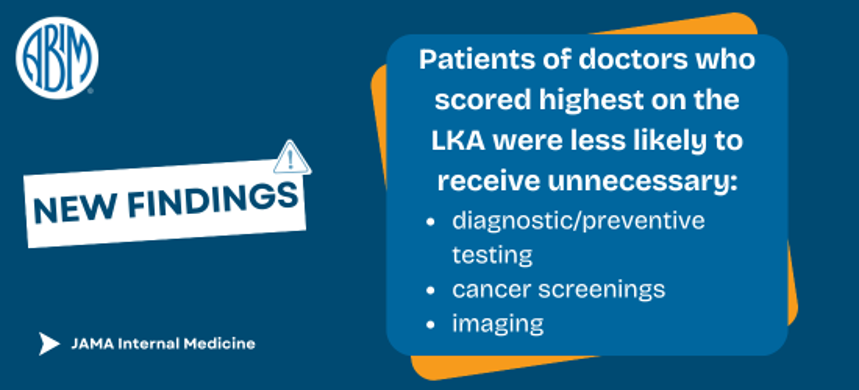
If all patients cared for by clinically active general internists received low-value services at the rate observed among the top-scoring LKA participants, then 80,000 fewer fee-for-service Medicare beneficiaries would receive any low-value service each year.
LKA enrollment open through Nov. 15, including new focused assessments
More physicians than ever are choosing the Longitudinal Knowledge Assessment (LKA®) to maintain their ABIM certification, with more than 92,000 physicians currently participating in it to maintain over 112,000 certificates.
Nearly 20,000 physicians have enrolled in the LKA in 2026 alone, with 85% of those due for assessment choosing it over the traditional, 10-year Maintenance of Certification (MOC) exam. You can compare the assessment options for yourself and learn how your peers made their decision.
While it is primarily an assessment of medical knowledge and judgment, physicians also say they appreciate the educational value of the LKA. In a study published last year in the Journal of General Internal Medicine, 95% of respondents reported learning from answering LKA questions and 73% said the LKA led to changes or intended changes in patient care.
As participation in the LKA increases, ABIM has introduced additional options based on physician feedback to better reflect what they encounter in daily practice, particularly subspecialists who practice primarily in highly focused areas. This year, ABIM introduced five new focused LKA options:
- Hematology LKA
- Gastroenterology LKA
- Medical Oncology LKA
These focused assessments cover the same core blueprint as the general specialty assessments but include a greater proportion of questions in the selected focus area.
This year only: Physicians currently enrolled in the Hematology, Gastroenterology or Medical Oncology General LKAs may switch to one of these new focused assessments without any change to their current five-year cycle. Both the general and focused versions of the LKA maintain your certification in the overall specialty (meaning the certification name remains the same). You can switch to one of the focused assessments until enrollment closes this year on November 15.
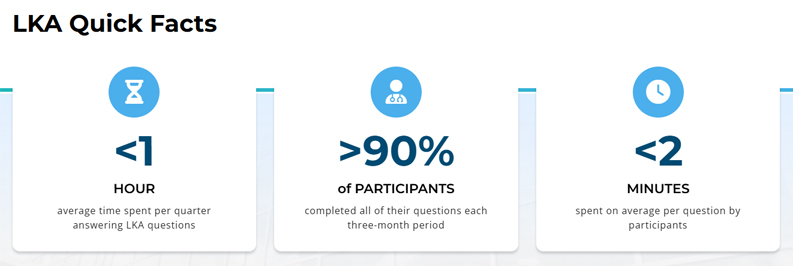
The LKA is available to any physician due for an assessment in any of 17 specialties, and to physicians holding time-unlimited certificates issued before 1990. Additionally, physicians with a lapsed certification can use the LKA to restore certification by meeting an overdue assessment requirement after successfully completing a five-year LKA cycle.
Enrollment for all ABIM assessments can be completed by signing in to your ABIM Physician Portal.
Mark your calendars! Important certification and MOC dates
Enrollment and Registration
Enrollment for all MOC assessments is currently open.
August 15, 2026: Registration closes for the fall 2026 traditional, 10-year MOC exam. The last day to request special accommodation for the fall 2026 traditional, 10-year MOC exam*.
December 1, 2026: Enrollment opens for all 2027 certification and MOC assessments.
LKA-Related
September 30, 2026: The last day to answer LKA third-quarter questions.
October 1, 2026: Fourth-quarter LKA questions are available.
November 15, 2026: Last day to enroll in the LKA for those with assessments due in 2026. (Enrolling at this time means you will have 10 “Life Happens” questions remaining over your five-year cycle.)
December 31, 2026: The last day to answer questions in the fourth quarter.
*Please see the ABIM policy on Testing Accommodations for Exam Takers with Disabilities.
Physicians born abroad play major role in care for millions of patients in underserved U.S. communities
More than 22 million Medicare patients received care from doctors born outside the United States in 2024, according to an American Board of Internal Medicine (ABIM) study published in JAMA. An analysis of internal medicine physicians—including those who continued their training to practice in subspecialty fields such as medical oncology and cardiology—revealed that doctors born abroad make up nearly half (47.2%) of the field’s workforce and provide essential care to patients in underserved communities.
Amid continued projections of physician shortages in most internal medicine disciplines and a shifting U.S. immigration policy landscape that has included travel bans, high H-1B visa fees and social media vetting of visa applicants, the study findings quantify the important role physicians from abroad play in caring for underserved patients across the American healthcare system.
Researchers analyzed data from 249,679 physicians initially certified in internal medicine by ABIM between 1990 and 2025, including 178,782 doctors linked to Medicare data.

Patients from underserved populations made up a significantly larger share of the patients cared for by non-U.S.-born international medical graduates (IMGs) than by U.S.-born U.S. medical graduates (USMGs), highlighting the importance of foreign-born physicians for the care of our nation’s most vulnerable patients.
Digital recognition for ABIM Board Certified physicians
ABIM Board Certified physicians now have a new way to showcase their board certification through a digital badge.
The digital badge is a secure, verifiable marker that enables certified physicians to highlight their certification with colleagues, employers, patients and professional networks.
Digital badge access: Eligible physicians received an email between July 14-15 from badges@abim.org. The email included instructions on how to claim the badge and access a personalized page.
Physicians can use their digital badge in several ways:
- Enhance professional presence: The digital badge is hosted at a unique, verifiable web address to download, embed or share on LinkedIn, professional websites, social media profiles, email signatures and other digital platforms.
- Help highlight the value of board certification: Digital badges help patients, colleagues and employers recognize and verify board certification and a physician’s commitment to maintaining high standards of patient care.
In addition, ABIM Board Certified physicians are now featured in the ABIM Spotlight Directory, where patients, employers and colleagues can verify certification status and view professional information. Physicians are encouraged to enhance their profile by adding a photo, biography and practice information.
The Check a Certification tool remains ABIM’s official resource for formal certification verification.
Your feedback in action: Revisions to initial certification blueprints
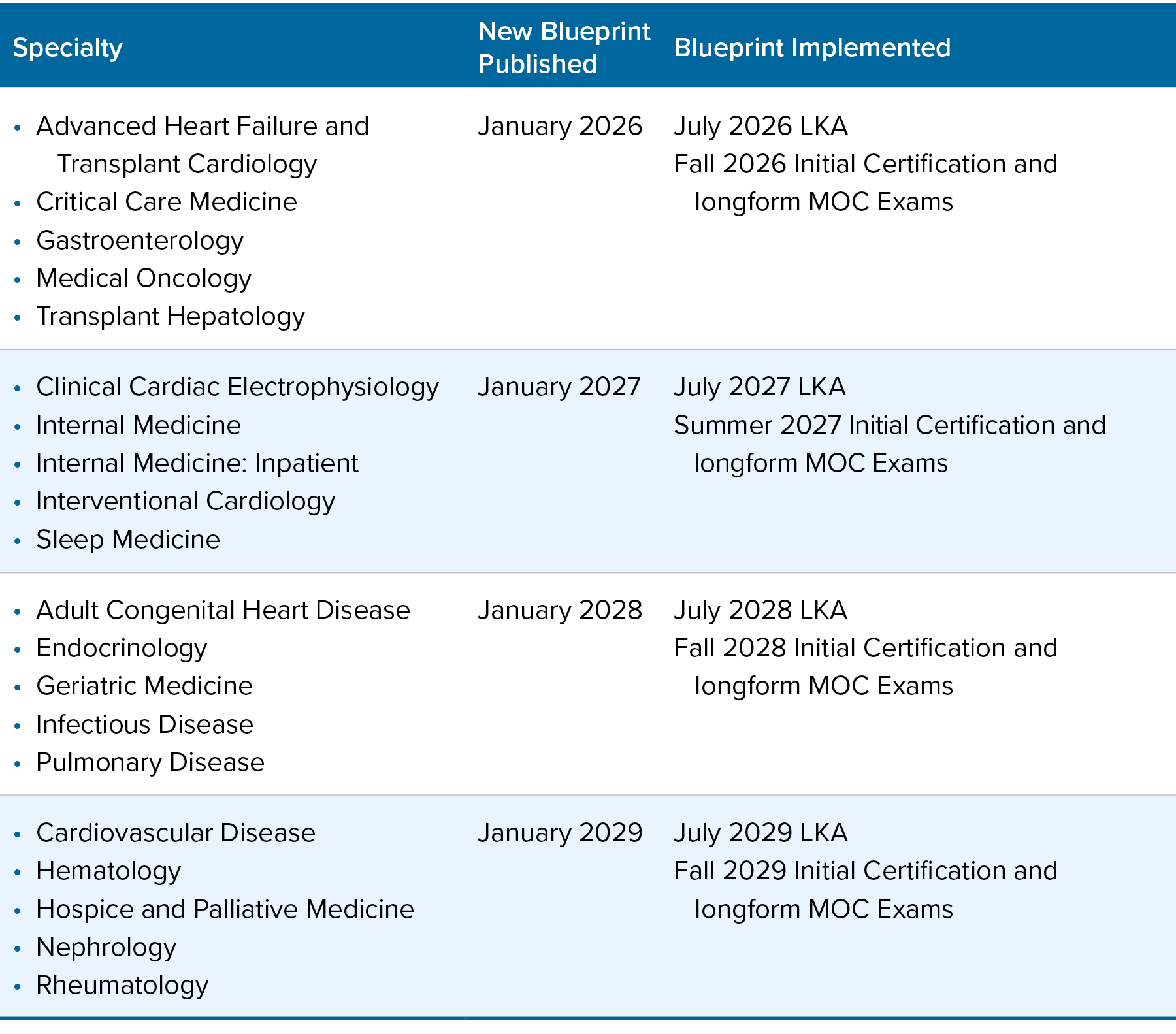
Following an extensive review process—including detailed feedback from more than 7,500 board certified physicians and evaluation by the respective ABIM Specialty Boards and Approval Committees—the initial certification blueprints for Advanced Heart Failure and Transplant Cardiology, Critical Care Medicine, Gastroenterology, Medical Oncology and Transplant Hepatology have been updated to better reflect what physicians see in practice today.
The new blueprints will go into effect for the fall 2026 administrations of the initial certification exams.
In addition, the blueprints have received a visual redesign that features a heatmap showing relevance ratings for second-level blueprint topics. Those who want additional information can access a more detailed expanded version that shows deeper layers of content within each topic area.
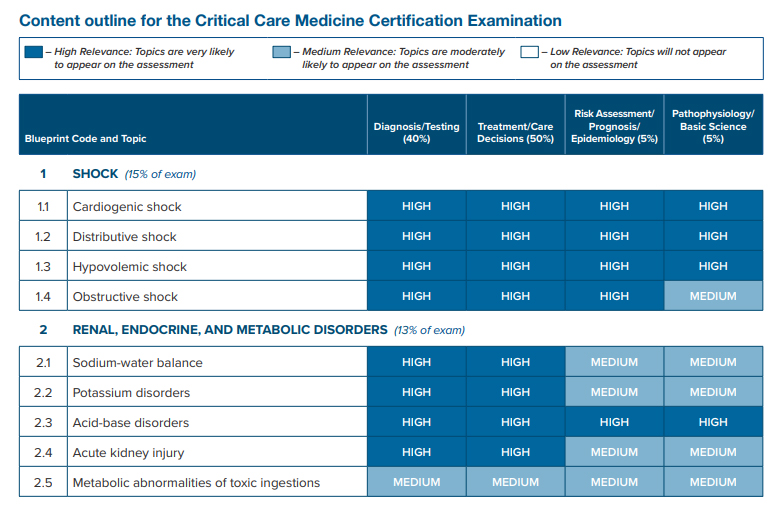
Blueprints play an important role in certification: they outline the key content areas, define the relative weighting of topics and give physicians a clear understanding of what to expect on the assessment.
Updated assessment blueprints will be available in other disciplines according to the following schedule. If the diplomate blueprint review has not yet been completed for your discipline, look for an email from ABIM inviting you to participate in a blueprint review and help shape the content of future assessments.
ABIM Needs-Based Certification Exam Fee Assistance Program application period opens Sept. 1
Recognizing the ongoing financial demands facing early career physicians, ABIM will continue its Needs-Based Certification Exam Fee Assistance Program pilot for the 2027 Internal Medicine Certification Exam. First-time candidates for the Internal Medicine Certification Exam are eligible to apply for a 50% credit on the exam fee.
The application period will be open for eligible first-time exam candidates from September 1 through October 16, 2026. ABIM will send application information to program directors in the coming weeks, and the application link will be made available on ABIM’s website and blog.
Last year, more than 850 physicians from over 250 residency programs received a 50% credit on their 2026 Internal Medicine Certification Exam fee, representing an investment of more than $600,000 in these early career physicians.
The program was created with guidance from the graduate medical education community, particularly program directors in internal medicine, to help reduce financial barriers for physicians pursuing ABIM Board Certification in Internal Medicine.
Those who previously received the credit cited a range of economic pressures, such as the high cost of living, expenses related to relocation, substantial educational debt, unexpected medical bills and the financial responsibility of supporting dependents.
More than 600 residents shared stories about their challenges, including a variety of financial, family, health-related and personal circumstances. Their perspectives highlighted the diverse experiences faced by physicians early in their careers.
As the demand for health care continues to grow, ABIM is proud to support candidates for the Internal Medicine Certification Exam at this important moment in their career so that they can go on to provide excellent care for patients in the future.