


Dr. Salahuddin Kazi: Looking Back on 12 Years of Service with ABIM
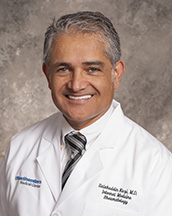
Salahuddin Kazi, MD, is the Vice Chair of Education for the Department of Internal Medicine and a Professor of Medicine in the Division of Rheumatic Diseases at the University of Texas (UT) Southwestern Medical Center in Dallas. Dr. Kazi joined ABIM Governance in 2014 as a member of the Rheumatology Board, and was appointed chair in 2020.
Dr. Kazi writes a weekly update to his internal medicine residents. Upon the approaching conclusion of his final term on ABIM Governance, he sent the following letter, which ABIM is honored to publish with his permission.
Dear Residents,
This month marks the end of my service on ABIM Governance.
I joined the ABIM Rheumatology Board in 2014 as a member and served in that role for six years. I was then honored to be selected as Chair of the Rheumatology Board, a position I held for another six years. With the completion of this term, my formal service with ABIM comes to a close.
Prior to joining the organization, my relationship with ABIM was much like yours is now. It was the entity that certified me after residency and fellowship and then recertified me every ten years. From the outside, it felt distant, somewhat corporate, and, if I am honest, a little intimidating.
What I gained through my service was an insider’s view of an organization whose mission is both simple and profound: of the profession, and for the public.
ABIM is an exceptionally thoughtful and rigorous organization devoted to the science of assessment. Its work begins with defining the knowledge, skills and clinical judgment expected of internists and subspecialists through carefully developed examination blueprints. These blueprints are not arbitrary lists of facts, but rather frameworks designed to identify the knowledge most essential for safe and effective patient care.
During my time with ABIM, I learned about the art and science of assessment. I saw firsthand the extraordinary efforts of physician volunteers who write and review examination questions, as well as the psychometric scientists who analyze, validate and refine those questions. Every item undergoes extensive review and testing. The process is deliberate, evidence-based and continuously improved. It is far more sophisticated than I ever appreciated as a trainee or practicing physician. Perhaps most importantly, I had the privilege of working alongside clinical leaders, educators, administrators and psychometric experts of remarkable caliber. Their commitment to fairness, rigor and continuous improvement left a lasting impression on me.
I would be remiss if I did not acknowledge the role that mentorship and sponsorship played in my own journey with ABIM. I am deeply grateful to David Johnson, who was Chair of Medicine at UT Southwestern at the time of my nomination and who himself served as Chair of the ABIM Board of Directors (2012 – 2013). Dr. Johnson encouraged me to apply for a position on the Rheumatology Board and generously supported my nomination. His confidence in me opened a door that ultimately led to 12 years of service, extraordinary professional relationships and a far deeper understanding of our profession’s commitment to self-regulation and public trust. I remain grateful for his mentorship, support and belief in my potential to contribute.
One of the misconceptions that many physicians carry, including me earlier in my career, is that certification examinations are intended to identify the “best” physicians or to measure mastery in all its dimensions. They are not. The purpose of certification is much more practical and important. The examination is designed to determine whether a physician possesses the knowledge and clinical judgment necessary for safe, effective and independent practice. In other words, the goal is not to identify perfection; it is to establish a reasonable, evidence-based and defensible standard of competence that the profession can stand behind and that the public can trust.
As many of you begin preparing for your own ABIM certifying examinations, I want to offer a note of reassurance. The assessment process you will undergo has been carefully designed, extensively studied and thoughtfully calibrated. No examination is perfect, and no assessment can fully capture the complexity of being a physician. Compassion, professionalism, teamwork, humility, wisdom and the ability to comfort a frightened patient are difficult to measure on any standardized assessment. Yet the people responsible for creating these examinations understand those limitations and work diligently to ensure that the process remains fair, valid and meaningful within its intended purpose.
Certification is not merely an examination to pass. It is one of the ways our profession demonstrates accountability to society and earns the trust that patients place in us. When you achieve ABIM certification, you will join a community of physicians who have demonstrated the knowledge and judgment expected of specialists in internal medicine. It is a credential that you should be proud to earn and carry throughout your career.
As I conclude this chapter of service, I leave with a deeper appreciation for the care, integrity and intellectual rigor that underpin the certification process. I am grateful for the opportunity to have contributed, in a small way, to that mission.
Warm regards,
Salahuddin Kazi, MD


