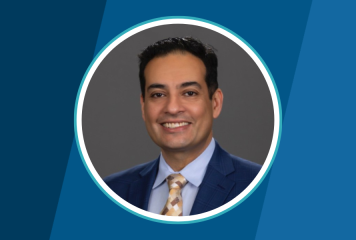
Meet new ABIM Board Director Kathleen G. Noonan
Kathleen G. Noonan is a lawyer and mediator who recently joined the ABIM Board of Directors. She is the President and Chief Executive Officer of the Camden Coalition, a multidisciplinary nonprofit in Camden, New Jersey, an alliance of primary care providers, health and social service organizations, and community representatives that works to transform health and social care ecosystems to ensure that people with complex care needs can achieve health and well-being.

The Camden Coalition does this by demonstrating new solutions with patients and providers, expanding evidence on what works and catalyzing action through training, technical assistance and policy advocacy. The Camden Coalition launched the National Center for Complex Health and Social Needs in 2016 to serve as a national hub for the field of complex care with support from the Robert Wood Johnson Foundation. Kathleen also serves as a mediator/monitor in several class action cases involving health and human services.
Previously, Ms. Noonan spent 10 years working at the Children’s Hospital of Philadelphia (CHOP), where she co-founded PolicyLab within the Research Institute and served as Associate Vice President for Board Governance. She continues to serve as adjunct faculty in the Division of Pediatrics at the University of Pennsylvania Perelman School of Medicine.
Why did you decide to apply to join the ABIM Board of Directors?
As a lawyer and someone who thinks about issues of professional agency as well as someone who has worked with many physicians both at the Children’s Hospital of Philadelphia and here in Camden, I have observed and heard numerous discussions and concerns among doctors about their diminishing authority related to health system decisions and patient care choices. I am lucky to have worked with some incredibly talented and well-meaning physicians who feel somewhat burned out and perplexed by the current trajectory of health care.
Joining ABIM’s Board of Directors is a way for me to contribute to an organization that cares deeply about physicians and the practice of medicine.
How has your background, which encompasses so many different areas of law, health care and public policy, prepared you for serving on the Board?
I hope to bring the perspective of the many voices that I have the privilege of hearing in the position that I’m in. At the Camden Coalition I work with healthcare providers, social care providers and consumer advocates. I hope to bring not just my voice, but those multiple perspectives into discussions at ABIM. I also want to bring the perspective of regular patients (I include myself in this category) that want doctors to be well-trained and well prepared to handle the modern challenges of clinical care.
I recently sat down with my organization’s board and asked the six consumer members where they found their health news. The most fascinating part was how much they relied on local experts—their friends, community organizations they trusted, people at their doctor’s office (not just the doctor). And so, I think that’s the kind of thing I might bring up at ABIM because as a professional organization, it is important to know where patients look for advice and information.
Are there any issues or trends in medicine that you will bring to the Board for discussion?
I am very interested in discussions about the future of the design of the healthcare delivery system. In the past five years, I have noticed an onslaught of new vendors (companies) and apps that purport to replace brick-and-mortar primary care and specialty care visits with virtual care. While I can’t say enough good things about the importance of telehealth and home health options, I am also worried that we are further eroding the idea that people will have what I call “relational continuity” with a provider. It certainly was a hallmark of the practice of medicine at one point, and I wonder to what and in what instances we will decide it is still important. I am excited to think about these issues with the ABIM Board of Directors.